Inside the hive during almond bloom: what your bees are doing
From the first warm afternoon to petal fall: how foragers work, why weather matters, and why colonies leave almonds stronger than they arrived.
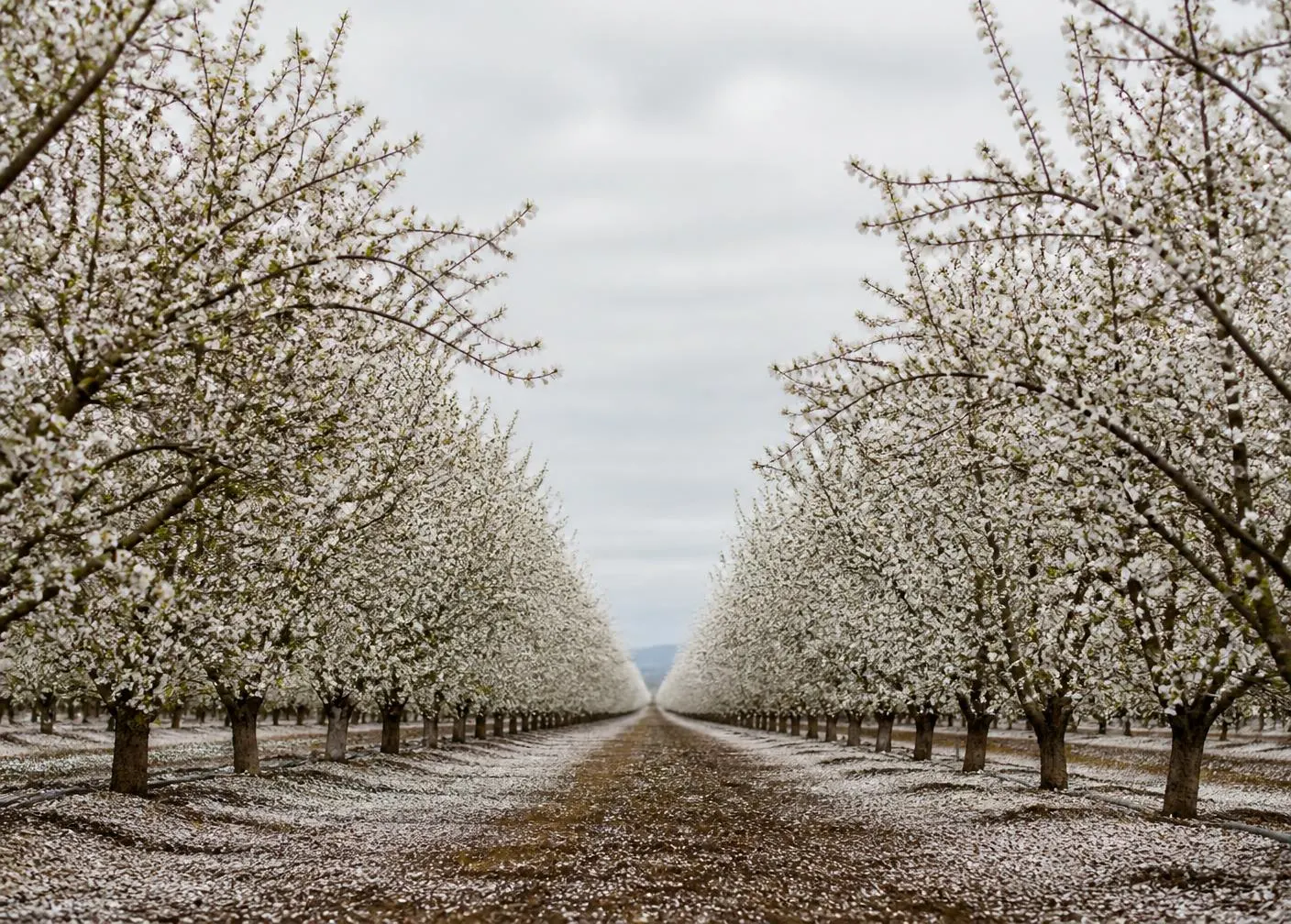
For three weeks or so in February and March, your orchard is the colony's whole world. Knowing what happens inside the hive helps explain why frame counts, placement and spray timing matter as much as they do.
Before the first flowers
Colonies arrive coming out of winter. A colony's job before bloom is to rear enough brood to have a big foraging force when flowers open, and weak colonies simply cannot rear enough brood to reach a useful size for almond pollination. Nutrition matters even before bloom starts: in one study, colonies given supplemental forage for a month before almond pollination died at lower rates than colonies that were not.
When bees fly
Bees need light and warmth to forage. Oregon State University's pollination guide says honey bees only rarely fly below 55°F, and stronger, more populous colonies start foraging at lower temperatures than weaker ones. Colonies with morning sun on the entrance also start earlier than colonies in shade.
That is why a cold, wet bloom is where strength pays. On a 56-degree afternoon between showers, a strong colony is working and a weak one may barely be flying. (More in How bloom weather affects pollination.)
What foragers are collecting
Foragers bring back nectar for energy and pollen for protein. Pollen is the colony's main protein source, supplying the amino acids, lipids, vitamins and minerals that larvae need to develop and that the queen needs to keep laying.
Almond pollen is a good food. The Almond Board describes it as abundant protein for bees and says colonies used in almond pollination are almost twice the size after bloom compared with colonies not involved with almonds. Board staff have also noted that hives get stronger while they pollinate almonds, which lets many beekeepers split colonies afterward.
The catch: one kind of pollen
An Oregon State and Texas A&M study that trapped pollen at almond, cherry, meadowfoam, blueberry and carrot seed sites found almonds produced large amounts of pollen, but with low diversity compared with cherry and meadowfoam. Bees do best on a mix. That is the case for bloom-time cover crops and nearby forage. (More in Cover crops for bees.)
Petal fall and moving out
Colonies come out when your PCA calls petal fall. Moving them promptly keeps them clear of post-bloom sprays and gets them to their next crop. (More in When should hives go in and come out?)
What growers can do
- Book strong colonies and ask for a written frame count at delivery. (See What is a frame count?)
- Put drops where they get morning sun. (See Where to place beehives.)
- Provide clean water near the drops.
- Keep bee-toxic sprays off blooming trees and follow the 48-hour notice rule. (See Spraying during bloom.)
Want colonies that arrive ready to work from the first open flowers? Request 2027 colonies.
Common questions
At what temperature do bees start flying in almonds?
Honey bees only rarely fly below about 55°F, according to Oregon State University. Stronger colonies start foraging at lower temperatures than weaker ones.
Do bee colonies get stronger during almond bloom?
Yes. The Almond Board says colonies used in almond pollination are almost twice the size after bloom compared with colonies not used in almonds, because almond pollen is an abundant protein source.
If almonds have so much pollen, why do bees need other forage?
Almond pollen is plentiful but not very diverse. Bees do best on a mix of pollens, which is why cover crops and other bloom-time forage help.
Planning for 2027 bloom?
Tell us about your blocks and we'll recommend a stocking rate and send a quote within one business day.