
Pollination 101
How almond pollination works.
Three weeks of bloom decide a year of crop. Here is what happens in your orchard, and what makes the difference between a box on a pallet and a working colony.
Sources: USDA NASS 2026 Almond Acreage Report; USDA Cost of Pollination 2025 via California Ag Today; Our Valley Voice (Mar 2026); RFD-TV / USDA NASS. Links at the bottom of this page.
Why almonds need bees
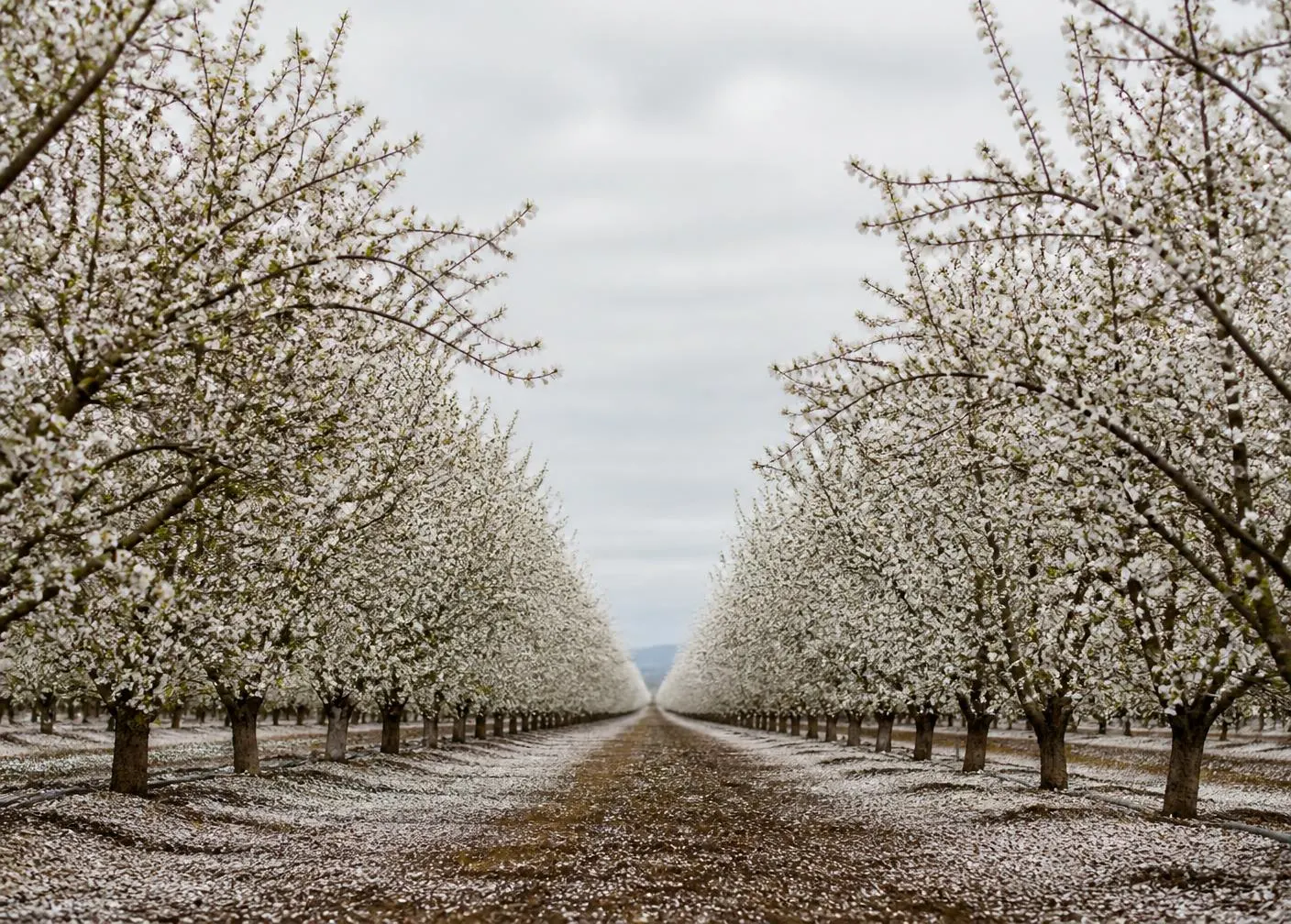
Most traditional almond varieties cannot pollinate themselves. A flower needs pollen from a different, compatible variety, which is why orchards are planted in alternating rows of a main variety and pollinizers. Wind does almost none of the work. Honey bees carry the pollen from row to row, and every nut on the tree starts with a bee visit during a short bloom window.
Self-fertile varieties such as Independence can set nuts with their own pollen, but bees still move that pollen within and between flowers. Almond Board-funded trials in 2020 and 2021 found significantly higher nut set and yield when bees were present.
Bloom is short, and weather decides it
California almond bloom runs from mid-February into March, starting first in the southern San Joaquin Valley and last in the northern Sacramento Valley. Each flower is only receptive for a few days, and the whole orchard is in bloom for roughly two to three weeks.
Bees begin foraging at about 55°F and work best above about 59°F, with wind under 10 mph and no rain. A cold, wet February can leave only a handful of good flying hours. UC farm advisors recommend leaning toward two to three strong colonies per acre when bloom weather is poor, so every flying window is used.
What you are really renting
Bees, not boxes.
A standard hive box holds ten frames. A colony's strength is how many of them are covered with bees. UC advisors describe a strong almond colony as one with at least 8 frames of bees, a laying queen and one to two frames of brood.
Brood matters because a colony raising young bees sends more foragers out for pollen. UC advisors note that an 8-frame colony collects about 2.5 times as much pollen as a 4-frame colony. Two weak colonies can do less work than one strong one.
How we grade coloniesHow many colonies per acre?
Most orchards plan for about two colonies per acre in mature traditional varieties. UC's general range is one to three strong colonies per acre, depending on variety, orchard age, layout and bloom weather. Self-fertile blocks usually need fewer. Read the full guide: How many beehives per acre do almonds need?
Where the bees come from
California needs roughly 2.4 to 2.6 million colonies for almond bloom, but only about 840,000 live in the state year-round. Most of the rest are trucked in from across the country each winter. Nearly 1.7 million hives crossed California's border inspection stations in 2025. After the record losses of the 2024-25 winter, when beekeepers representing 68% of U.S. hives lost an average of 62% of their colonies, the strength of those incoming colonies varies more than ever.
That is why a written frame standard and an inspection at delivery protect you. Read: Bee supply for the 2027 almond bloom.
What growers can do to protect their bees
- Keep one line of communication. The Almond Board's Honey Bee Best Management Practices call for a clear communication chain between grower, PCA, applicator and beekeeper during bloom. Tell your beekeeper before anything is sprayed near the bees.
- Protect foragers during bloom. Bloom-time sprays are where most bee injury happens. Follow the Best Management Practices and your PCA's guidance on what is applied during bloom and when, and avoid spraying while bees are flying.
- Give bees clean water. Foragers need water close to the hives, especially on warm bloom days. Clean water keeps them from drinking from treated puddles or ditches.
- Make room for night moves. Colonies move at night when the bees are home. Clear, firm access roads and agreed drop sites keep deliveries fast and safe.
- Plan pickup with your PCA. UC advisors suggest removing hives once about 90% of the flowers in the last pollinizer variety have shed pollen, before post-bloom sprays begin.
After almonds
Almonds are the biggest pollination event in the country, but not the only one. Sweet cherries, plums and other stone fruit, hybrid seed crops such as sunflower and onion seed, and melons all depend on bees later in the spring and summer. See cherries and stone fruit, seed crops and melons and more.
Your orchard blooms once a year. Make it count.
Colonies for the 2027 almond bloom are being committed now. Tell us about your blocks and we will call you within one business day.