
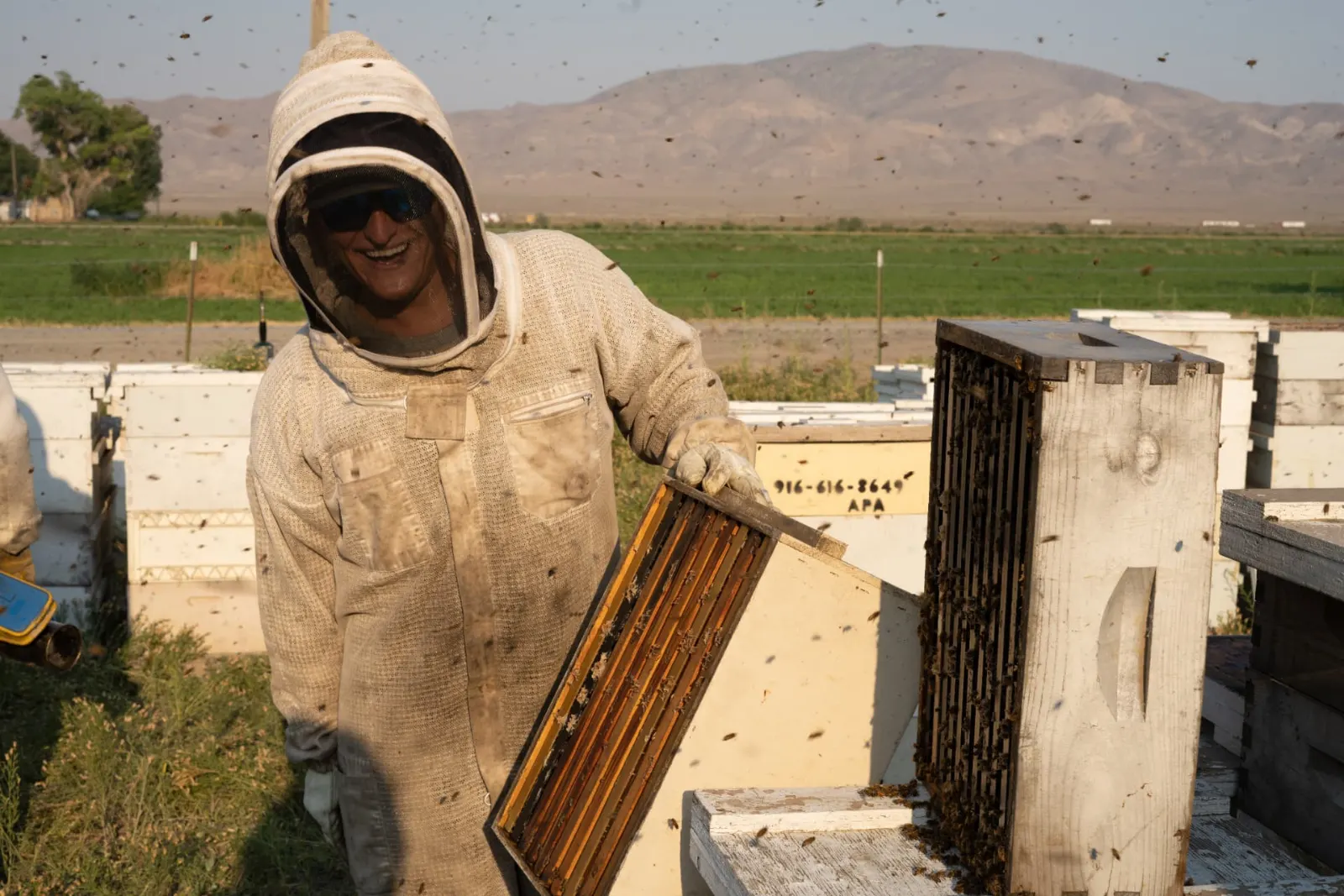
Spring through summer
Melons and more pollination
Our colonies also work melons, kiwi, oranges and other specialty crops. If it flowers and it needs bees, ask us.
What to expect
- Crops
Cantaloupe, watermelon and other melons, kiwi, oranges and more.
- Small or large
From a single field to large operations across several counties.
- Ask us
Do not see your crop listed? Call and we will tell you straight whether we can help.
- Stocking rate
UC recommends one to two colonies per acre for watermelon, placed when male flowers begin to appear. For cantaloupe, one per acre is the minimum, and two to three sets the crop faster.
Common questions
How many hives per acre do melons need?
UC recommends one to two colonies per acre for watermelon and treats one per acre as the minimum for cantaloupe. In UC trials, two to three colonies per acre shortened the fruit-setting period by a week or more and added marketable crates.
When should bees go into a melon field?
When male flowers begin to open. Colonies placed too early tend to settle on other forage.
Is there a minimum order?
Call us. We work with single fields and with large operations across several counties.
Every colony graded when it lands.
Your contract states a minimum frame count. We grade colonies at delivery, your inspector is welcome, and you get a written report after bloom.
How we grade coloniesLearn before you book
Grower guides
Straight answers with sources, from stocking rates to contracts.
Hives per acre by crop- Watermelon and cantaloupe pollination: how many hives per acre?
Melon flowers are few and short-lived. Why one colony per acre is a floor, not a target.
- How much does it cost to rent beehives? 2025 pollination fees by crop
USDA's latest survey: about $209 a colony for almonds, $81 for cherries, $95 for watermelon. What drives the gap and how to budget.
- Do avocado groves need honey bees? Hives per acre and cost
A tree can open a million flowers and keep fewer than 200 fruit. What bees do, how many to place and how to judge the cost.
- How many beehives per acre? A crop-by-crop guide for California
Starting stocking rates for almonds, cherries, prunes, avocados, melons and seed crops, with the source behind each number.
- How bloom weather affects almond pollination: cold, rain, wind and frost
Bees need about 55°F, light wind and no rain. Here is what bad bloom weather does, and what you can still control.
Request colonies for melons and more
Tell us about your blocks. Our team will get back to you within one business day to talk through stocking rate, timing and placement.
Other crops we pollinate
Request colonies for 2027
Tell us your crop, county and acres and we will get back to you within one business day with a stocking-rate recommendation and a quote.
Prefer to talk now? Call (916) 249-0711.
We text only about your request. Message and data rates may apply. Reply STOP to opt out. See our SMS Terms and Privacy Policy.