
March and April
Cherries and stone fruit pollination
After almonds, our colonies move into cherry, plum and prune blocks. Short bloom windows and changeable spring weather make timing and colony strength matter even more.
What to expect
- Crops
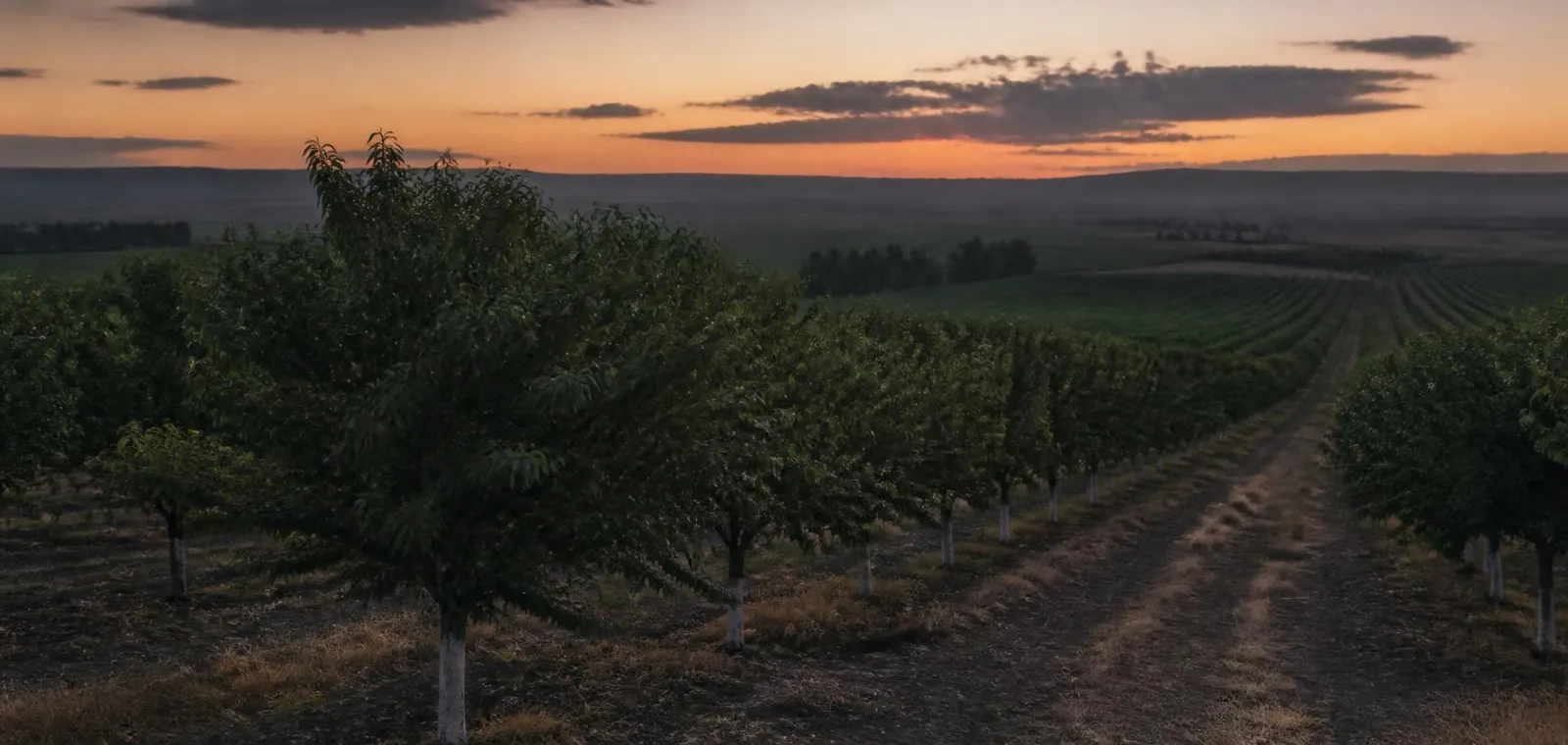
Sweet cherries, plums, prunes and other stone fruit across the Sacramento and San Joaquin valleys.
- Timing
We coordinate delivery to your varieties so colonies are working at first bloom, not a week into it.
- Weather
Strong colonies fly in cooler, marginal weather. That is when frame count earns its keep.
- Stocking rate
About one strong colony per acre is a common starting point for sweet cherries, up to two in wet springs or dense plantings. Sacramento Valley prune growers commonly use about one per acre.
- Heavy set needed
Cherries need roughly 80% of their flowers pollinated for a commercial crop, so bee numbers and colony strength both matter.
Common questions
How many hives per acre do cherries need?
A common starting point is one strong colony per acre, with up to two in wet springs, dense plantings or blocks with a history of poor set. See our guide to cherry and prune pollination for the research behind the numbers.
Do prunes need bees?
UC advisors describe bees as insurance for prunes: not strictly necessary in a strong bloom with good weather, but valuable when bloom or weather is marginal. Growers commonly use about one hive per acre.
Can you follow my almonds into cherries?
Yes. Many growers keep the same colonies and the same contact from almonds through stone fruit.
How many colonies do I need?
It depends on variety, spacing and pollinizers. We will recommend a rate after looking at your blocks.
Every colony graded when it lands.
Your contract states a minimum frame count. We grade colonies at delivery, your inspector is welcome, and you get a written report after bloom.
How we grade coloniesLearn before you book
Grower guides
Straight answers with sources, from stocking rates to contracts.
Hives per acre by crop- Cherry and prune pollination: hives per acre and timing
Cherries need most of their flowers to set. Prunes use bees as insurance. How to plan colonies for both.
- How much does it cost to rent beehives? 2025 pollination fees by crop
USDA's latest survey: about $209 a colony for almonds, $81 for cherries, $95 for watermelon. What drives the gap and how to budget.
- How many beehives per acre? A crop-by-crop guide for California
Starting stocking rates for almonds, cherries, prunes, avocados, melons and seed crops, with the source behind each number.
- Spraying during almond bloom: how to protect the bees you rent
Fungicide timing, the 48-hour bee check and the other habits that keep colonies healthy and working.
- California bee notification rules: BeeWhere, bee checks and the 48-hour notice
Before a bee-toxic product goes on blooming plants, California requires a bee check. How it works for growers, PCAs and beekeepers.
Request colonies for cherries and stone fruit
Tell us about your blocks. Our team will get back to you within one business day to talk through stocking rate, timing and placement.
Other crops we pollinate
Request colonies for 2027
Tell us your crop, county and acres and we will get back to you within one business day with a stocking-rate recommendation and a quote.
Prefer to talk now? Call (916) 249-0711.
We text only about your request. Message and data rates may apply. Reply STOP to opt out. See our SMS Terms and Privacy Policy.