Spraying during almond bloom: how to protect the bees you rent
Fungicide timing, the 48-hour bee check and the other habits that keep colonies healthy and working.
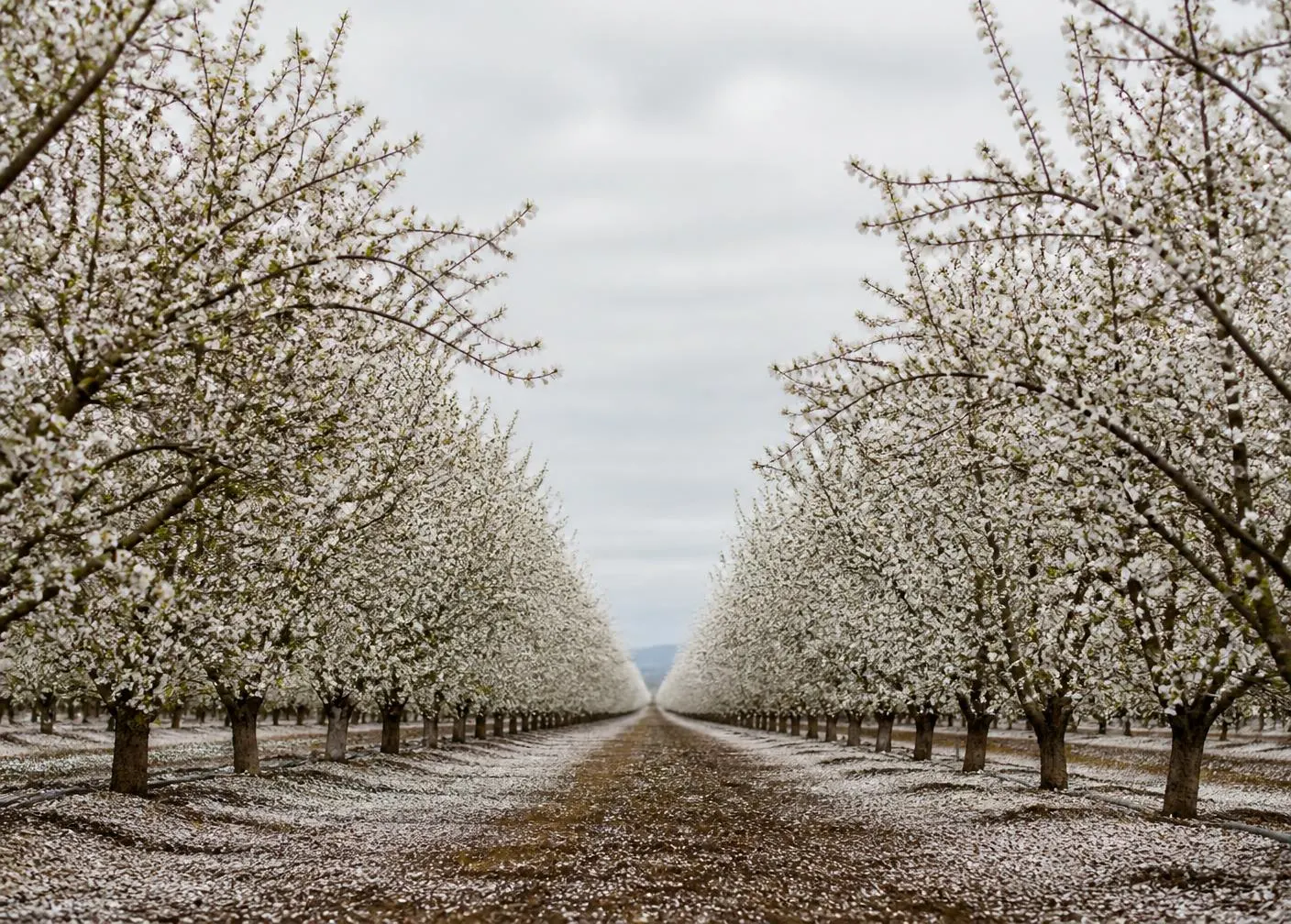
Bloom is when your orchard holds the most bees, and it is also when bloom disease sprays tend to go on. The Almond Board of California's Honey Bee Best Management Practices and UC's pest management guidance come down to a handful of habits. Follow them and you protect the colonies you are paying for, and the crop they are setting.
1. Spray only when it is needed
Not every bloom needs heavy spraying. UC Cooperative Extension's Sacramento Valley bloom newsletters describe a single fungicide spray at 30% to 40% bloom when the bloom is dry, and a pink bud spray plus a full bloom spray when it is rainy. Your PCA will decide based on the forecast and your orchard's disease history. The fewer bloom applications, the less exposure for the bees.
2. Fungicides only, and no tank mixes with insecticides
The Almond Board's guidance is to apply only fungicides during bloom if a treatment is necessary, and to avoid insecticides and tank mixes that include them. If a pest truly has to be treated in bloom, UC's guidelines point to options that are gentler on bees and to the other timings in the season: delayed dormant, post-bloom and in-season.
3. Spray in the evening or at night
Bees forage in daylight and come home at dusk. The Almond Board recommends that any necessary bloom fungicide go on in the late afternoon or evening, when bees and pollen are not present. UC IPM puts the window between sunset and midnight. If your crew works at night, remember that California requires a safety meeting before each night shift.
4. Skip adjuvants unless the label requires them
UC IPM advises against adding adjuvants to fungicide applications during bloom, or when bees are active, unless the label or regulations call for one. Some adjuvants can make a fungicide harder on bees.
5. Keep spray off the hives and the water
- Never spray hives directly. Have the applicator shut off nozzles as the rig passes hive drops.
- Cover or remove water sources before spraying, or put out fresh, clean water afterward.
- Mark hive drops on the map your applicator uses.
6. Do the 48-hour bee check
California law requires anyone planning to apply a pesticide labeled "toxic to bees" to a blooming crop to check for registered apiaries within one mile of the site, and to notify the beekeepers who asked for notice at least 48 hours ahead. Growers, PCAs and applicators do this through the BeeWhere system or the county agricultural commissioner. BeeWhere gives you the beekeeper's contact information. It does not send the notice for you.
Many beekeepers want to hear about every bloom application, not only the ones the law covers. A quick call costs nothing and keeps everyone on the same page.
7. Put the plan in the contract
Your pollination agreement should say who tells the beekeeper about bloom-time sprays, and how far ahead. Beekeepers pay attention to this. A University of Illinois study of commercial beekeepers tested contract clauses such as night-only fungicide applications with no tank mixes, a sign of how much bloom spraying weighs on the people supplying your bees. (More in our contract checklist.)
If something goes wrong
If you see dead or dying bees near the hives after an application, call your beekeeper right away and report it to the county agricultural commissioner. The Almond Board asks growers to report suspected incidents as soon as possible, because bee health problems cannot be fixed without the data.
When you book with us, tell us who will call in bloom sprays so the notice reaches the right person on our side. Request 2027 colonies.
Common questions
Can I spray fungicide while bees are in my almond orchard?
Yes, if a bloom spray is needed. Use fungicides only, avoid tank mixing insecticides, skip adjuvants unless the label requires them, and apply in the late afternoon, evening or at night when bees are back in the hive.
Do I have to notify the beekeeper before spraying?
For pesticides labeled toxic to bees applied to blooming plants, California requires a check for registered apiaries within one mile and 48 hours notice to beekeepers who requested it. Many beekeepers also want to hear about fungicide applications, so a courtesy call is good practice.
What time of day is safest to spray during bloom?
Evening or night. UC IPM recommends applying between sunset and midnight, when honey bees are not foraging.
Planning for 2027 bloom?
Tell us about your blocks and we'll recommend a stocking rate and send a quote within one business day.