How much does it cost to rent beehives? 2025 pollination fees by crop
USDA's latest survey: about $209 a colony for almonds, $81 for cherries, $95 for watermelon. What drives the gap and how to budget.
The price of renting honey bees depends mostly on which crop you grow and when it blooms. USDA's National Agricultural Statistics Service surveys what growers actually paid. Here are the latest numbers for California and what sits behind them.
2025 fees in California, Arizona and Hawaii
USDA groups California with Arizona and Hawaii (Regions 6 and 7) in its Cost of Pollination report, released in February 2026.
| Crop | Price per colony | Price per acre |
|---|---|---|
| Almonds | $209 | $310 |
| Watermelon | $94.70 | $91.80 |
| Apples | $86.90 | $57.80 |
| Cherries | $80.90 | $119 |
| Cantaloupe | $73.60 | $49 |
| Sunflower | $48.80 | $65.40 |
| All other crops | $104 | $207 |
The almond figure was up 15% from $181 per colony in 2024. For comparison, Pacific Northwest growers paid about $60 per colony for cherries and $54 for apples in the same survey.
Why almonds cost so much more
- Timing. Almonds bloom in February, very early in the bee year. Beekeepers have to feed, treat and build colonies through fall and winter so they are strong at bloom.
- Scale. USDA counted about 1.63 million colonies rented for almonds in the region in 2025, more than every other crop combined. Most of those bees are trucked in from other states.
- History. USDA's Economic Research Service found almonds accounted for 82% of all U.S. spending on pollination in 2016, when growers paid about $165 per colony against an average of $55 for other crops.
How to budget
Work it out per acre: your stocking rate times the price per colony. The USDA per-acre figures also show the rates growers actually used. For example, 47,000 colonies on 29,800 cherry acres works out to about 1.6 colonies per paid acre, and almonds came out at about 1.6 as well.
- Almonds: 2 colonies per acre at about $200 to $210 each is roughly $400 to $420 per acre. Self-fertile blocks at 0.5 to 1 per acre cost a fraction of that.
- Cherries: 1 to 2 colonies per acre at about $80 each is roughly $80 to $160 per acre.
- Melons: 1 to 2 colonies per acre at $75 to $95 each.
See our crop-by-crop stocking rate guide for the research behind each rate.
What moves the price
- Colony strength. Stronger colonies cost more to build. UC Davis research found growers pay a premium of roughly 5.7% to 8.6% for higher-strength guarantees.
- Bloom timing and competition. Crops that bloom at the same time compete for the same colonies.
- Booking date. Strong colonies are committed first. (More in Why book early.)
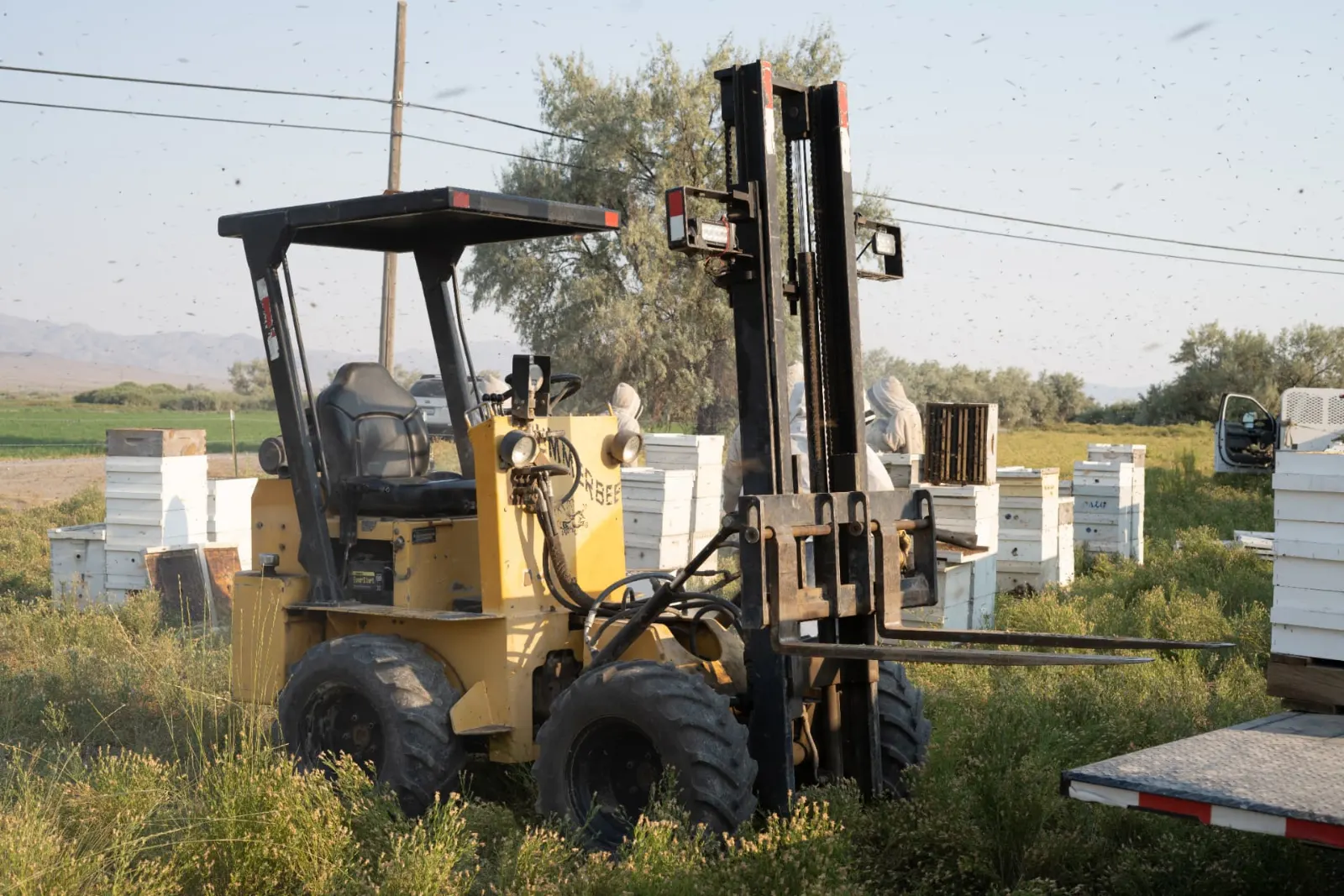
- Logistics. Distance, access for trucks and forklifts, and how many drops your fields need.
Small orchards
A small block still needs strong colonies placed where bees reach every row. Ask for the same written frame standard a large grower gets. We work with orchards of any size, and a 40-acre block gets the same standard and the same phone number as a large contract. Ask for a quote.
Common questions
How much does it cost to rent a beehive for pollination?
It depends on the crop. In USDA's 2025 survey for California, Arizona and Hawaii, growers paid an average of about $209 per colony for almonds, $81 for cherries, $95 for watermelon, $74 for cantaloupe and $49 for sunflower.
Why is almond pollination so expensive?
Almonds bloom in February, early in the bee year, and the crop needs well over a million strong colonies at once. Beekeepers feed and build colonies all winter, and most of the bees are trucked in from other states.
How do I estimate my pollination cost per acre?
Multiply your stocking rate by the price per colony. For example, almonds at two colonies per acre and about $205 per colony come to roughly $410 per acre.
Planning for 2027 bloom?
Tell us about your blocks and we'll recommend a stocking rate and send a quote within one business day.