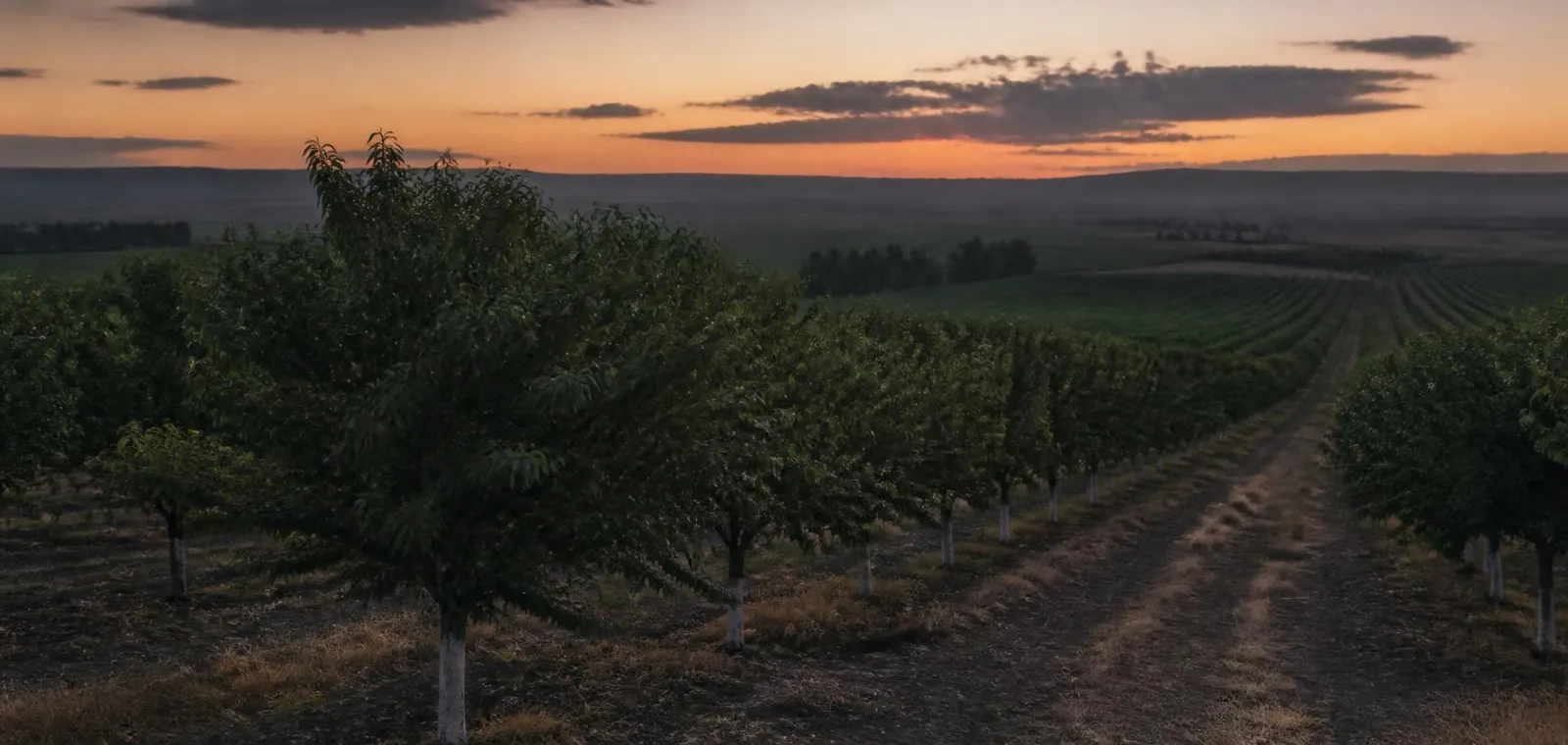
Which California crops need honey bees, and which don't?
Almonds, cherries, melons and kiwifruit depend on bees. Walnuts, pistachios and olives don't. A quick guide, crop by crop.
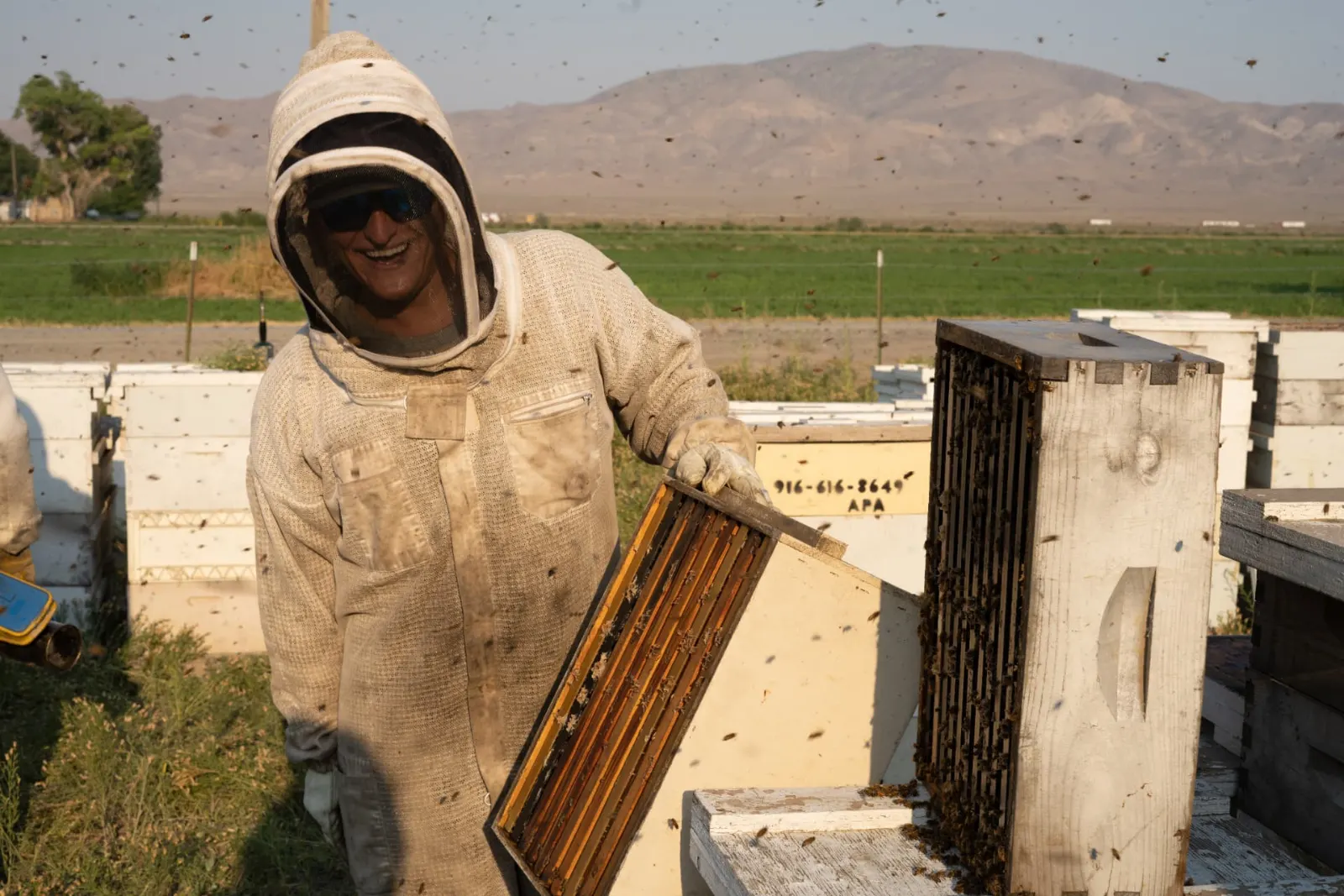
A lot of California farmland sits next to crops that need bees and crops that do not. Knowing which is which helps you plan colonies, sprays and neighbors. Here is a quick guide based on University of California and USDA sources.
Crops that need bees
| Crop | Why bees matter | Typical stocking |
|---|---|---|
| Almonds | Traditional varieties need cross-pollination between rows. Even self-fertile Independence set more nuts with honey bees in a study shared by UC ANR. | About 2 per acre; 0.5–1 for self-fertile |
| Cherries, plums, prunes, apricots, peaches, nectarines | UC's Fruit & Nut Research and Information Center says all Prunus crops require insects for pollination, though reliance varies by species. | About 1 per acre for cherries and prunes |
| Watermelon and cantaloupe | Bees carry pollen from male flowers to the flowers that set fruit. UC treats one colony per acre as the minimum for cantaloupe. | 1–2 per acre for watermelon; 1+ for cantaloupe |
| Kiwifruit | Male and female flowers grow on separate vines. UC says wind pollination is unsatisfactory because it does not produce large fruit. | See our kiwifruit guide |
| Hybrid seed (sunflower, onion, alfalfa) | Bees move pollen between male and female rows. | 2–2.5 for sunflower; 10–12 for onion seed |
| Avocados | Flowers are open only about two days. Growers rely heavily on rented honey bees. | See our avocado guide |
| Blueberries | Oregon State researchers count blueberries among the major pollinator-dependent crops in Oregon and California. | Ask us |
For the research behind each rate, see our crop-by-crop stocking guide.
Crops that don't need bees
- Walnuts. Male flowers hang in catkins and the pollen is wind-dispersed.
- Pistachios. Wind-pollinated. The flowers have no petals or nectar to attract insects, and male trees make up only about 5% of an orchard.
- Olives and chestnuts. UC lists both, with walnuts and pistachios, as crops whose pollen is carried by wind.
- Citrus. A UC farm advisor put it plainly: bees are generally not required to produce citrus fruit. The catch runs the other way. Bees carrying pollen from a compatible variety can put seeds in seedless mandarins, which is why beekeepers and mandarin growers in California have had to work out how to coexist.
- Processing tomatoes. Outside their native range, tomatoes are largely self-pollinating and unattractive to bees.
Why it still matters for crops that don't need bees
Bees visit plenty of crops they are not needed for, so a spray on a blooming crop can still reach them. California's bee-check rule applies to any pesticide labeled toxic to bees going onto a blossoming plant, whether or not that crop depends on bees. (More in California bee notification rules.)
Curious what grows around you? Each of our county pages lists the county's top crops from county crop reports or the Census of Agriculture, and notes which of them need bees.
Common questions
Do walnuts need bees?
No. Walnut pollen is carried by wind from the male catkins to the female flowers.
Do pistachios need bees?
No. Pistachios are wind-pollinated, and their flowers have no petals or nectar to attract insects.
Does citrus need bees?
Generally not. Citrus sets fruit without bees, but bees can cross-pollinate seedless mandarins with compatible varieties and make the fruit seedy.
Which California fruit trees need bees?
Almonds and stone fruit in the Prunus genus, including cherries, plums, prunes, apricots, peaches and nectarines, all need insects for pollination, although some depend on them much more than others.
Planning for 2027 bloom?
Tell us about your blocks and we'll recommend a stocking rate and send a quote within one business day.