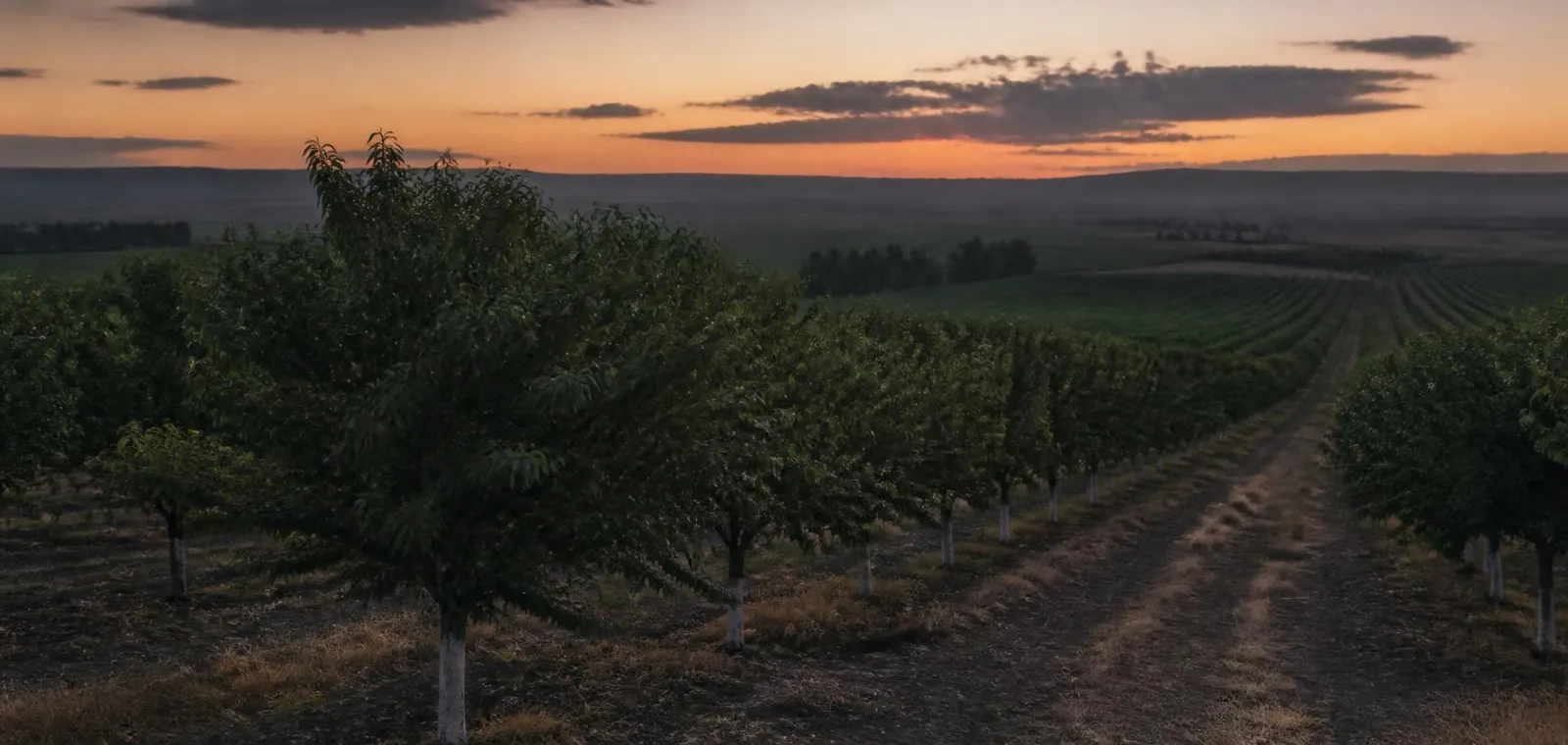
When should beehives go into almond orchards and come out?
Timing the drop and the pickup so bees are working when your flowers open.
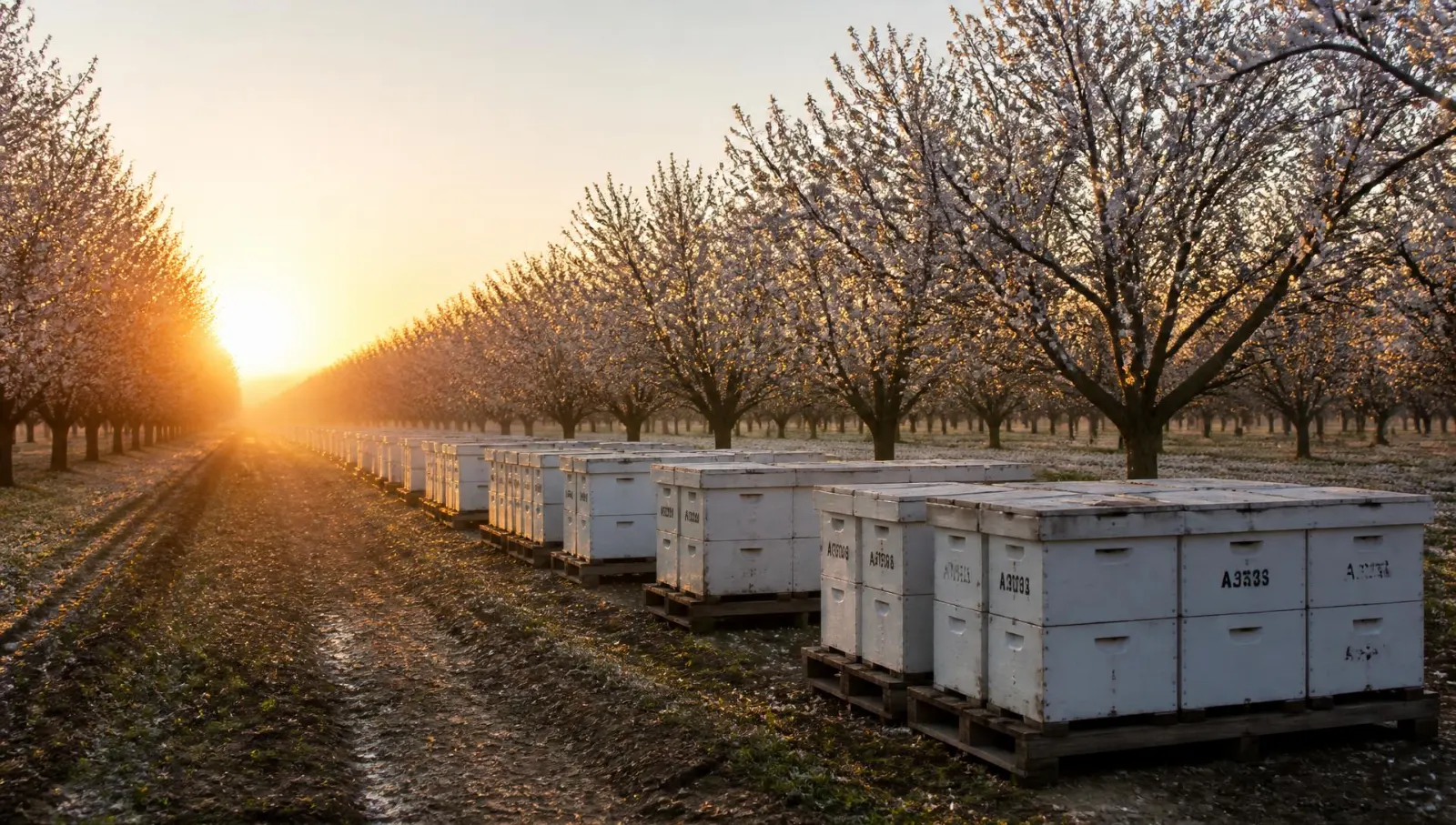
Almond bloom in California usually runs from mid-February into March, starting earlier in the southern San Joaquin Valley and later in the northern Sacramento Valley. The goal is simple: colonies working from the first open flowers, not settling in a week later.
When to place hives
There are two common approaches. The University of California has recommended moving hives in at about 10% bloom, when there are enough flowers to hold the bees in the orchard. Many growers set colonies just before or as their earliest variety starts to open, so foragers are oriented and flying at first bloom. Either way, agree on the trigger with your beekeeper. Colonies are usually moved at night, when the bees are home, and set in drops spaced so they cover the whole block. (More in Where to place beehives.)
When to remove hives
UC advisors recommend removing hives once about 90% of the flowers in your last pollinizer variety have shed their pollen. Pulling earlier can cost you late flowers. Leaving them later exposes bees to post-bloom sprays.
Watch the weather, not just the calendar
Bees begin foraging at about 55°F and work best above about 59°F with wind under 10 mph and no rain. A cold start to bloom is when strong, well-placed colonies pay for themselves.
Agree on it in writing
Put the delivery window, removal trigger and who makes the call (you or your PCA) in the pollination agreement, along with how the beekeeper will be told about any bloom-time sprays.
Planning for 2027 bloom?
Tell us about your blocks and we'll recommend a stocking rate and send a quote within one business day.