Why so many bee colonies died, and what it means for growers
Mite-borne viruses and treatment-resistant varroa drove record losses. What changed, and how to protect your bloom.
If you rented bees for the 2025 almond bloom, you probably heard about the losses. Here is what happened, what scientists found, and what it means when you book colonies for 2027.
What happened
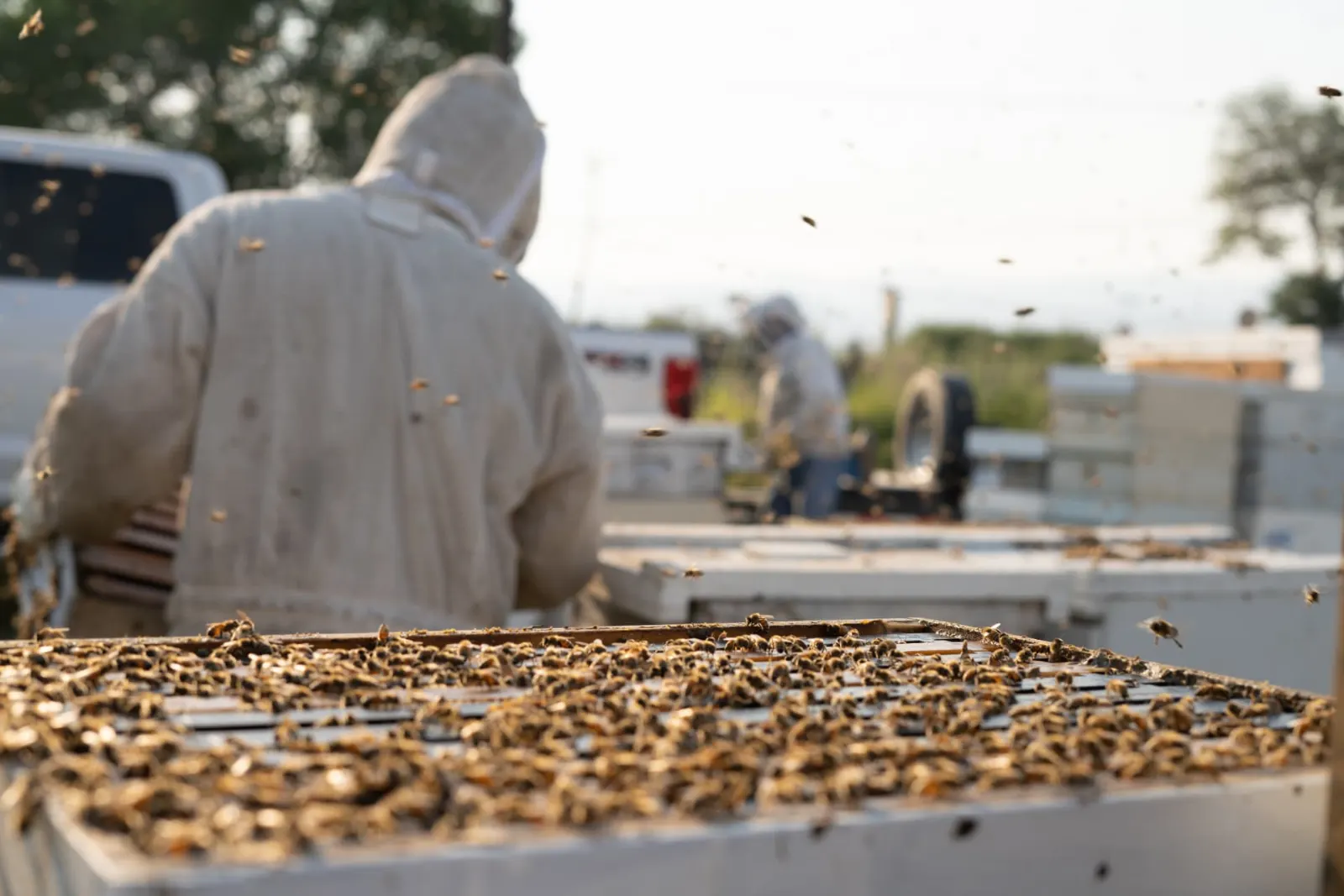
In the months before the 2025 almond bloom, commercial beekeepers reported losing more than 60% of their colonies, about 1.7 million colonies, with an estimated cost of around $600 million in lost honey, lost pollination income and replacement colonies. Many were lost just as colonies were being staged for California's almond bloom.
What USDA scientists found
In January and February 2025, USDA Agricultural Research Service scientists sampled colonies in California and other western states before almond pollination. They found:
- high levels of deformed wing virus A and B and acute bee paralysis virus in the bees they sampled, viruses spread by the varroa mite; and
- that every mite they tested carried resistance to amitraz, one of the most widely used varroa treatments in U.S. beekeeping.
Their conclusion: mite-borne viruses, made worse by mites that treatment no longer controls well, drove the collapse. UC advisors reached the same reading, noting that the difficulty of controlling varroa was the likely driver.
Where things stand now
The national U.S. Beekeeping Survey put losses from April 2025 to April 2026 at 39.9%, down from 55.6% the year before. Better, but still about four in ten colonies lost, and many operations are still rebuilding. Varroa control is now a year-round job, and the work that decides how strong a colony is in February happens the previous summer and fall.
What it means for growers
- Strength varies more. When beekeepers are short, weak colonies get delivered. A hive with four frames of bees looks just like one with eight from the orchard road. Write a minimum frame standard into your contract. (More in What is a frame count?)
- Inspect at delivery. Grade a sample of hives soon after they land, or have an independent inspector do it. (See What a strong hive looks like at delivery.)
- Book early. Beekeepers commit their best colonies first.
- Help the bees you rent. Michigan State Extension points to two things growers control: more forage and less pesticide exposure. See cover crops for bees and spraying during bloom.
What we do
Our own colonies are fed, treated for mites and built up in our holding yards through winter so they peak at bloom. Every colony, ours or a partner's, is graded at delivery against our written standard. See Our standard, or book 2027 colonies.
Common questions
What caused the 2025 honey bee colony losses?
USDA Agricultural Research Service scientists linked the losses to high levels of viruses spread by varroa mites, including deformed wing virus A and B and acute bee paralysis virus. Every mite they tested carried resistance to amitraz, a common mite treatment.
Are bee colony losses still high?
They eased but remain high. The U.S. Beekeeping Survey put losses from April 2025 to April 2026 at 39.9%, down from 55.6% the year before.
Planning for 2027 bloom?
Tell us about your blocks and we'll recommend a stocking rate and send a quote within one business day.