What a strong hive looks like at delivery
How inspectors check colony strength, and what you can see for yourself on delivery morning.
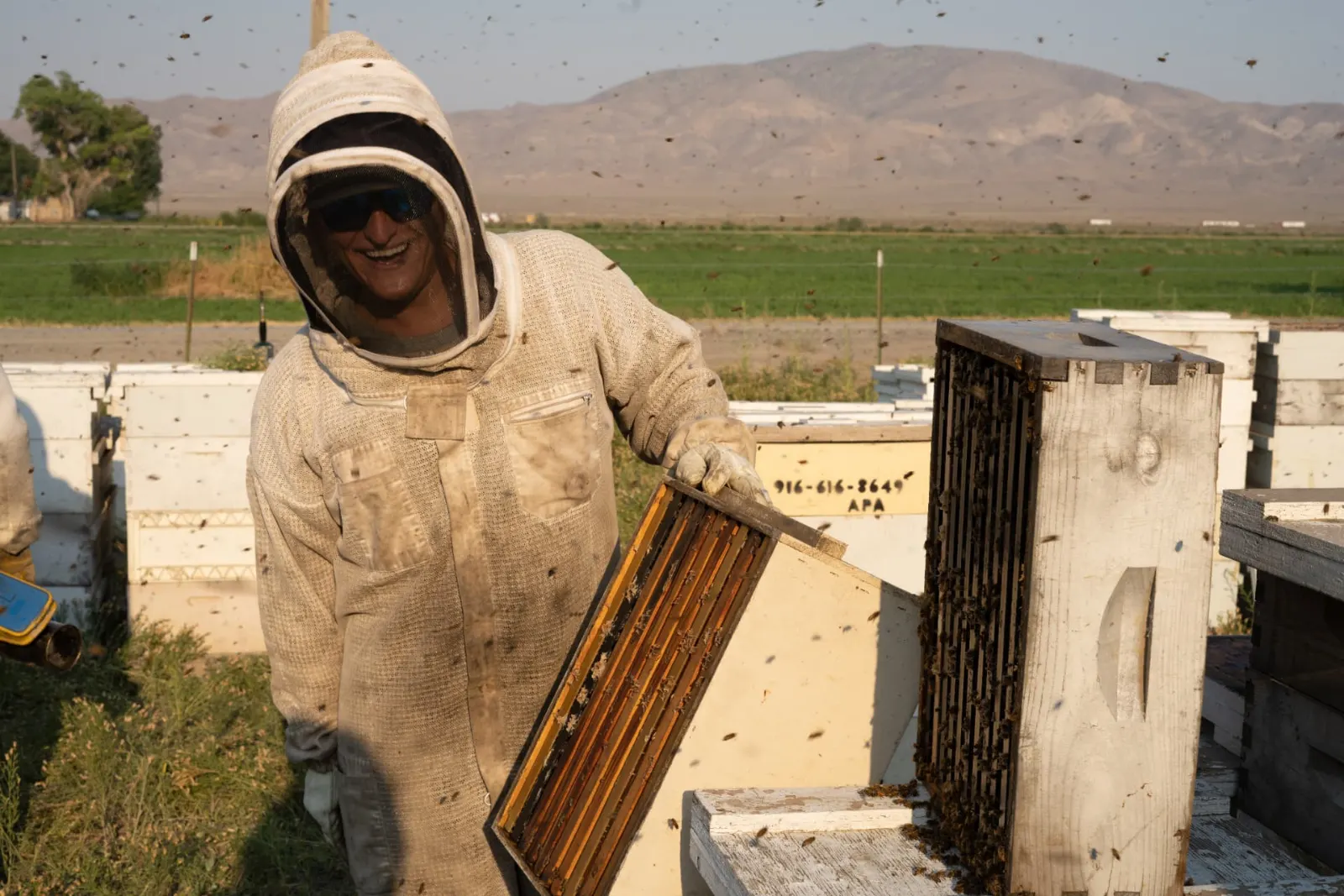
Two hives can look identical on a pallet. What matters is inside: how many frames are covered with bees. Here is what a strong colony looks like when it lands in your orchard, and how strength gets checked.
The benchmark: 8 frames of bees
UC advisors describe a strong almond colony as one with at least 8 frames covered with bees, a laying queen and one to two frames of brood. An 8-frame colony collects about 2.5 times as much pollen as a 4-frame colony. Earlier UC work found little added foraging beyond about 12 frames, so the goal is a strong, working colony, not the biggest box in the yard.
How inspectors check
There are two common methods, both covered in UC's Honey Bees and Colony Strength Evaluation course:
- Frame inspection. The inspector opens the hive and judges how much of each frame is covered with bees. Accurate, but slower and more disruptive to the colony.
- Cluster count. On a cool morning the inspector views the cluster of bees from above and below without pulling frames. It is faster and gentler, and was developed and checked against frame-by-frame counts at UC Davis.
Inspectors typically grade a random sample of hives in each orchard, often around 10%, and report each graded hive and the orchard average. Colony strength counts frames of bees, not boxes or brood.
When to check
Check soon after delivery, once colonies have had a little time to settle. The Almond Board's Honey Bee Best Management Practices suggest letting hives acclimate to the orchard before inspecting, and telling the beekeeper so they can help handle the hives. A count near the end of bloom does not tell you what was working when your first flowers opened.
What you can see for yourself
- Traffic at the entrance. On a warm, calm afternoon, a strong colony has steady flights in and out, with foragers coming home carrying pollen.
- Early starts. Research in almond orchards found strong colonies start flying earlier in the morning than weak ones, and east-facing hives start sooner than west-facing ones.
- Placement. UC advisors recommend groups of hives where early sun warms them, spaced no more than about a quarter mile apart.
If colonies come in weak
Your contract should say what happens: replacement colonies or a price adjustment. We grade colonies in every drop at delivery, our own and our partner beekeepers' alike, and replace weak ones. Your inspector is welcome on day one. See Our standard.
Planning for 2027 bloom?
Tell us about your blocks and we'll recommend a stocking rate and send a quote within one business day.