Almond varieties and bloom timing: what it means for pollination
Most almonds need pollen from a different, compatible variety that blooms at the same time. How variety mix shapes your bee plan.
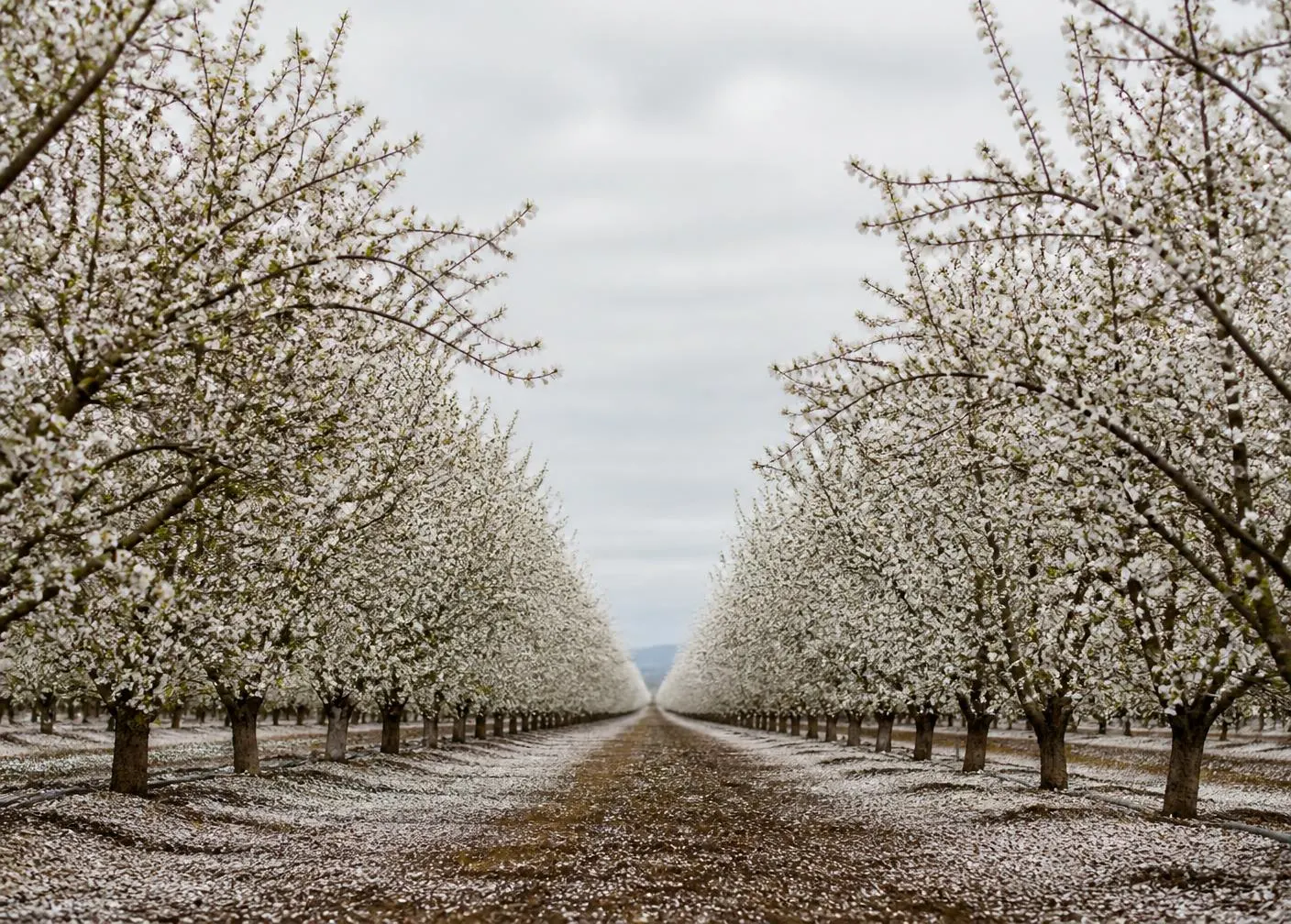
Almond pollination is really a variety question. Bees do the carrying, but the pollen has to come from the right tree, at the right time.
Why almonds need pollinizers
In the 1920s, UC researchers W.P. Tufts and G.V. Philp showed that almonds are self-incompatible: a tree cannot set nuts with its own pollen. Growers have planted pollinizer varieties ever since, and rented honey bees to carry the pollen between them. Self-fertile varieties such as Independence are the exception, and even they set more with bees present. (See How many hives do self-fertile almonds need?)
Nonpareil sets the clock
Nonpareil is California's leading variety. USDA put it at about 39% of production in 2024 and about 40% of the forecast crop in 2025. Most orchards are built around Nonpareil, with pollinizers such as Monterey, Butte, Carmel, Padre and newer varieties chosen to bloom alongside it.
Bloom groups and overlap
UC groups almond varieties by when they reach peak bloom relative to Nonpareil. Early varieties, for example, peak six days or more before Nonpareil. UC's Almond Production Manual notes that varieties in the same bloom group, or in adjacent groups, usually overlap enough to cross-pollinate, unless they are in the same incompatibility group. The closer two varieties bloom together, the better the chance of a good set, because flowers are receptive at the same time and bees move between nearby trees.
Newer varieties are bred with this in mind. Kester, for example, is fully cross-compatible with Nonpareil and flowers about five days after it.
Why a third variety helps in the north
UC Sacramento Valley advisors note that northern weather often spreads bloom out, so having at least three compatible varieties in an orchard can give the best chance of a commercial crop. When cold weather stretches or staggers bloom, a third variety keeps compatible pollen available longer.
What it means for your bee plan
- Delivery: plan around your earliest variety, so bees are working when its first flowers open.
- Removal: plan around your latest pollinizer. UC advisors recommend removing hives once about 90% of the flowers in the last pollinizer variety have shed their pollen.
- Self-fertile blocks: set a lower stocking rate for those blocks, but make sure drops still reach the traditional blocks next door.
- Uneven blocks: self-fertile plantings can develop unevenly. In February 2026, Blue Diamond reported Independence plantings ranging from just starting to bloom to near peak at the same time.
Tell us your varieties and acreage by block, and we will plan timing and stocking rate around them. Request 2027 colonies.
Common questions
Do almond trees need a pollinizer?
Most do. Almonds are generally self-incompatible, so pollen has to come from a different, compatible variety. Self-fertile varieties such as Independence are the exception, though they still set more with bees present.
What are common pollinizers for Nonpareil?
Common pollinizers have included Monterey, Butte, Carmel and Padre, along with newer varieties such as Kester. Check compatibility and bloom overlap with your farm advisor or nursery before planting.
Planning for 2027 bloom?
Tell us about your blocks and we'll recommend a stocking rate and send a quote within one business day.